Author: OruVia-Global

  • Lagos Landing: A Checklist for the First 72 Hours of an Expat Assignment

    Lagos Landing: A Checklist for the First 72 Hours of an Expat Assignment

    The first three days of an expat assignment in Lagos are often the most volatile. You are transitioning from the sterile, predictable environment of an international flight into one of the world’s most energetic—and complex—metropolises.

    In Lagos, the “Standard Operating Procedure” isn’t found in a handbook; it’s built through local intelligence and proactive logistics. To ensure your assignment starts with momentum rather than frustration, your first 72 hours must be engineered for Zero Friction.


    Hour 0–6: The Arrival Transition

    The goal here is a “soft landing.” The “Trust Deficit” begins at the airport gate.

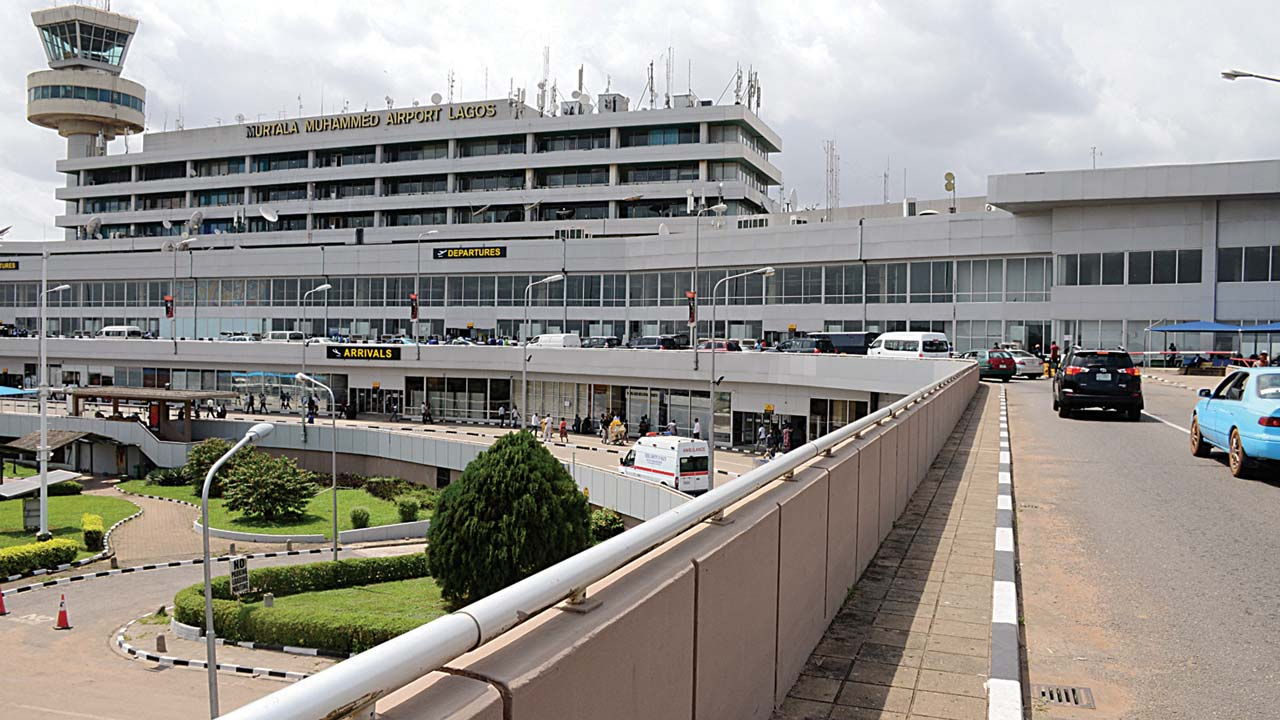
    • The MMA Protocol: Do not navigate customs or baggage claim alone. Ensure a professional meet-and-greet service is waiting at the jet bridge to fast-track your entry.
    • Vetted Secure Transit: Your first impression of Lagos shouldn’t be through the window of an unvetted taxi. A pre-arranged, professional driver who knows the optimal routes to Ikoyi, Victoria Island, or Ikeja is non-negotiable.
    • Connectivity First: Do not rely on international roaming. Your “Lagos Landing” kit should include a pre-activated local SIM card with a robust data plan, ready for immediate use.

    Hour 6–24: Environmental Calibration

    Once you are behind the gates of your residence or hotel, the focus shifts to internalizing your new environment.

    • The Power & Utility Audit: Understand the “Grid vs. Generator” rhythm of your location. Ensure your local support team has verified fuel levels and inverter functionality.
    • Digital Perimeter Check: Set up your secure home/office Wi-Fi immediately. In a dual-structure model, this is your lifeline back to your Strategic HQ.
    • Hydration & Provisioning: Ensure a “Starter Pack” of premium bottled water and essential provisions is already in-situ. Lagos is not a city where you want to be hunting for the basics on your first night.

    Hour 24–48: The Operational Setup

    Day two is about establishing your professional presence on the ground.

    • Office Pre-Run: If you are moving into a new office space, a member of your operations team should have already conducted a “Pre-Run”—checking everything from desk ergonomics to the reliability of the local ISP.
    • Local Banking & Documentation: Start the process for local banking or residency permits. In Nigeria, these “paperwork loops” can be lengthy; starting at Hour 24 prevents bottlenecks at Week 4.
    • Meeting the Gatekeepers: Introduce yourself (or have your Executive Partner introduce you) to the essential contacts: the building manager, the security lead, and the key local vendors.

    Hour 48–72: Cultural & Social Integration

    By the third day, the “fog of travel” has lifted. Now, you begin to occupy the city.

    • The Route Audit: Conduct a “dry run” of your commute to key meeting hubs (like the Lagos Business School or Eko Atlantic) during peak traffic hours to calibrate your expectations of “Lagos Time.”
    • Social Concierge: Book a table at a premier Ikoyi or VI establishment (such as RSVP or The George). This isn’t just for a meal; it’s about observing the social and business pulse of the city’s elite.
    • Wellness Check: Identify your nearest high-end wellness or medical facility. Knowing where to go before you need it is a hallmark of the Oruvian Standard.

    The OruVia Edge: Your Invisible Landing Team

    At OruVia, we specialize in the “Lagos Landing.” Our Lagos Operations Hub handles every item on this checklist—and more—before you even touch down at MMA. We provide the “Errand Pre-Runs,” the “MMA Protocol,” and the “Vetted Movement” that turn a high-stress transition into a seamless executive arrival.

    Are you preparing for a Lagos assignment?

    Don’t spend your first 72 hours solving problems that we have already mastered. Join our Lagos Landing Pilot Program and let us engineering your arrival.

    [Accept Your Pilot Invitation]

  • Leading Across Time Zones: How to Maintain Continuity from D.C. to Lagos

    Leading Across Time Zones: How to Maintain Continuity from D.C. to Lagos

    For the modern executive, the world is flat, but the clock is not.

    Managing an operation that spans from the policy-driven corridors of Washington D.C. to the high-velocity commercial engine of Lagos creates a unique set of challenges. When your morning in the U.S. is already your team’s afternoon in Nigeria, “business as usual” can quickly devolve into a game of catch-up.

    Without a deliberate strategy, the five-to-six-hour time difference becomes a “continuity gap” where decisions stall, emails pile up, and momentum dies.


    The Friction of Asynchronous Leadership

    The most common mistake leaders make is trying to force a 9-to-5 rhythm onto a 24-hour global reality. This leads to:

    • The “Midnight Ping”: Executives staying up until 2:00 AM to catch a Lagos morning update.
    • Decision Bottlenecks: A Lagos team losing half a day of productivity while waiting for a D.C. approval.
    • The Blur: A life where you are never fully “on” because you are never truly “off.”

    To lead effectively between these two hubs, you don’t need more hours; you need a System of Continuity.


    The OruVia Strategy for Global Flow

    At OruVia, we manage this exact corridor for our partners. Here is how we bridge the D.C.-to-Lagos gap:

    1. The “Handover” Protocol

    The most critical hour of your day is the overlap. We establish a “Briefing Handover” where your Lagos Operations Hub prepares a high-level summary of the day’s wins, blockers, and required decisions before the D.C. Strategic HQ even comes online. You wake up to a curated roadmap, not a chaotic inbox.

    2. Aggressive Asynchronous Documentation

    We move the “Institutional Knowledge” out of your head and into structured systems. By using brand-compliant document formatting and proactive briefing notes, we ensure that your Lagos team has the context they need to act with your “judgment” while you sleep.

    3. The 4D Triage across Borders

    Time zones are the greatest enemy of the inbox. Our Triage system operates across these zones, ensuring that urgent Lagosian logistics are handled by our on-ground team in real-time, while “Strategic D.C.” matters are prioritized for your morning review.

    4. Cultural Translation, Not Just Time Translation

    A 10:00 AM meeting in D.C. feels very different than a 4:00 PM meeting in Lagos. We manage the “energy” of the schedule, ensuring that high-stakes negotiations are timed for when both parties are at their peak, navigating the subtle cultural nuances of both environments.


    The Continuity Advantage

    When you bridge the gap between D.C. and Lagos correctly, the time difference stops being a hurdle and starts being an advantage. You effectively create a 24-hour operational cycle. While you rest in one time zone, your infrastructure is moving forward in the other.

    This is the “Oruvian Standard”—providing the dedicated capacity that ensures your leadership remains constant, no matter where you are on the map.


    Reclaim Your Global Momentum

    Are you tired of being the bottleneck in your own global expansion?

    OruVia is currently accepting five founding clients for our Lagos Landing Pilot Program. We specialize in providing the continuity-based support that founders and leaders need to operate seamlessly across time zones.

    [Request a Private Consultation]

  • The Bandwidth Tax: Why Lagos Logistics Costs More Than Just Money

    The Bandwidth Tax: Why Lagos Logistics Costs More Than Just Money

    For the global executive, time is a finite currency. But there is a secondary, more insidious currency that is often depleted long before the workday ends: Mental Bandwidth.

    In high-growth hubs like Lagos, the “Bandwidth Tax” is the hidden levy paid by every leader who finds themselves managing the minutiae of urban friction. It is the cognitive cost of navigating a trust deficit, unpredictable infrastructure, and the relentless logistics of a city that never stops moving.


    The Anatomy of a Bandwidth Leak

    In London, New York, or Dubai, the “infrastructure of life” is largely invisible. You tap a button, and a car arrives. You send an email, and a vendor delivers. In these environments, your focus remains on the $10,000-an-hour decisions.

    In Lagos, that infrastructure is often visible, loud, and demanding.

    When an executive has to personally verify if a driver is on the correct route, confirm if the office generator has been serviced, or navigate a three-hour delay at the airport, they aren’t just losing time. They are losing Focus Capital. Every logistical “hiccup” requires a micro-decision. By 2:00 PM, the executive is suffering from decision fatigue—not because of the boardroom, but because of the “Lagos Friction.”


    Why It Costs More Than Money

    You can always earn more revenue, but you cannot reclaim the cognitive energy spent on a failed logistics chain. The Bandwidth Tax manifests in three ways:

    1. Opportunity Cost: The hour you spent coordinating a SIM card activation or a residential utility fix was an hour you didn’t spend on your expansion strategy.
    2. Reputational Friction: In a global market, “Lagos excuses” don’t travel well. A missed call or a delayed briefing note due to local chaos affects how your global partners perceive your reliability.
    3. The Exhaustion Ceiling: When you are the project manager of your own life, you hit your ceiling faster. Burnout among expat leaders in West Africa is rarely about the work; it’s about the weight of the environment.

    The OruVia Pivot: From Friction to Flow

    At OruVia, we believe that the highest ROI an executive can achieve in Lagos is reclaimed bandwidth. Our model is designed to absorb the urban friction before it ever reaches your desk. By utilizing a US Strategic HQ to manage the standards and a Lagos Operations Hub to execute on the ground, we create a “Buffer Zone” for our clients.

    • The MMA Protocol ensures your arrival isn’t a stressful negotiation, but a seamless transition.
    • 4D Inbox Triage ensures your digital life is as organized as your physical one.
    • Vetted Movement turns a cross-town commute into a productive mobile office.

    Reclaim Your Narrative

    Lagos is a city of immense opportunity. It is a place for leaders, builders, and visionaries. But to win here, you cannot be bogged down by the “how.” You must remain focused on the “what” and the “why.”

    Stop paying the Bandwidth Tax. It’s time to outsource the friction to a partner that understands the soil but speaks the language of global precision.


    Is your bandwidth currently leaking into the logistics of Lagos?

    We are currently inviting five founding clients into our Lagos Landing Pilot Program. Request your 15-minute Triage Session today to audit your friction points and start your 30-Day Executive Sprint.

    [Accept Your Pilot Invitation]